

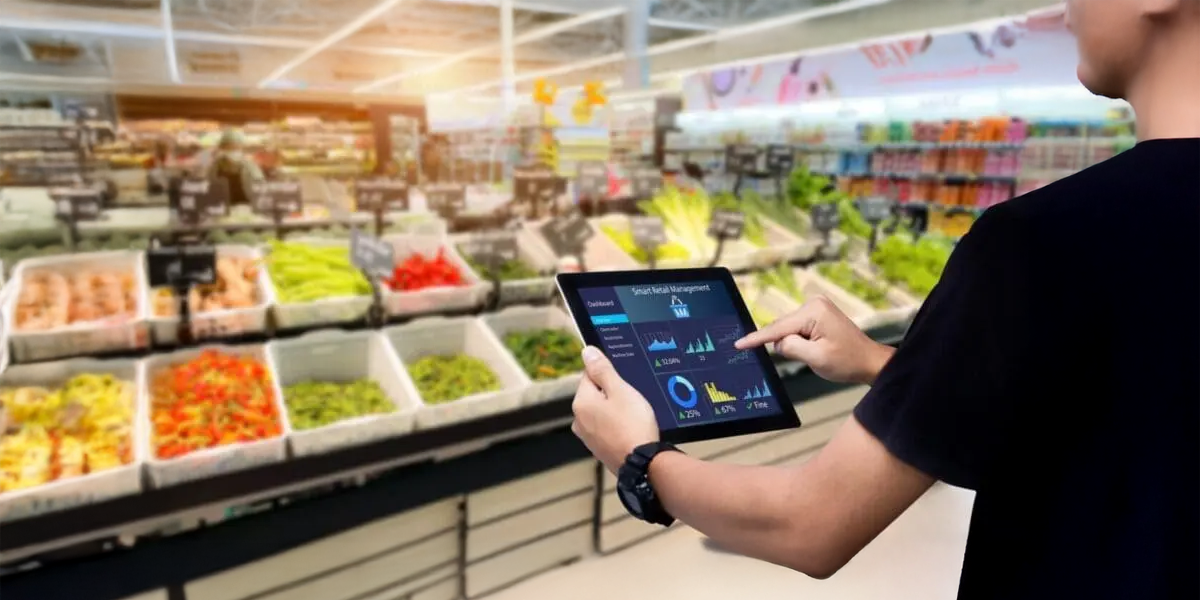
The food industry is one of the most complex sectors to manage, governed by vital factors such as quality, speed, traceability, and legal compliance in both production and distribution. It requires precise control at every step—from the supply chain and production to inventory management and sales. Consequently, Enterprise Resource Planning (ERP) systems are no longer an option but a necessity for food industry businesses.
Developed by Industrial Application Software (IAS) with over 35 years of experience, Canias ERP stands at the heart of sectoral digital transformation with its modular structure, full integration capabilities, and flexible solutions tailored for food companies.
The Importance of Digital Transformation in the Food Sector
In an era of rapidly changing consumer demands, globalized supply chains, and tightening legal requirements, operating with manual or fragmented systems is both risky and costly. ERP systems consolidate this complex structure into a single digital platform.
Canias ERP provides data integrity by digitizing all processes from production to distribution. This enables businesses to:
- Achieve traceability from raw material entry to the final product output.
- Minimize inventory losses and waste (scrap) rates.
- Easily comply with quality standards and legal regulations.
- Make fast and accurate decisions based on real-time data.
Integrated Management with Canias ERP
The modular structure of Canias ERP integrates all departments of a food enterprise. A seamless data flow is established between units such as production, quality, procurement, logistics, and finance. This ensures every department works from the same source with the same accurate data.
1. Production and Recipe Management
In the food sector, production processes depend on product recipes. Through the Production Management (PRM) module, businesses can perform recipe-based production planning and track raw material quantities and costs for each batch in real-time. Changes in recipes are reflected instantly, ensuring the entire production line operates on the most current information.
2. Quality and Traceability
The Quality Management (QMS) and Logistics (LOG) modules digitize quality control steps at every stage. Automatic lot and serial number tracking is performed for every product batch. In the event of a recall, the system can identify which batch went to which customer within seconds.
3. Supply Chain and Procurement Management
The supply chain is the heart of the food industry. Canias ERP automates order processes and optimizes stock levels by analyzing supplier performance. Automated order suggestions accelerate Material Requirements Planning (MRP) and significantly reduce waste rates.
Legal Compliance and E-Transformation
Food companies carry high responsibility regarding compliance with Ministry of Agriculture, TSE, and EU standards. Through the E-Transformation (ETR) modules, businesses manage e-invoice, e-archive, e-waybill, and e-ledger processes in full compliance. Furthermore, the infrastructure’s ISO 27001:2013 information security standards ensure the highest level of data privacy.
Smart Tracking on Production Lines: Canias IoT
Canias ERP is not just software; it is a technology that brings the Industry 4.0 vision to the food sector. Through Canias IoT, real-time data from machines on the production line is collected and analyzed. This data is automatically transferred to the production planning module, where energy consumption, machine performance, and downtimes are reported instantly.
Data-Driven Strategic Decisions: caniasIQ
In fast-moving consumer goods (FMCG) sectors like food production, decisions measured in seconds can make a massive difference. The business intelligence module, caniasIQ, analyzes and visualizes all data collected in the ERP system. Utilizing In-Memory Technology, reports are prepared in seconds, allowing for easy viewing of sales trends and cost analyses.
Measurable Benefits Provided by ERP in the Food Industry
The contribution of ERP systems to the food industry is not limited to digitalization; they also measurably improve key performance indicators such as efficiency, quality, cost, and customer satisfaction.
Canias ERP provides both technical and operational advantages in this field. Developed with IAS’s more than 35 years of experience, the system establishes an integrated, transparent, and sustainable structure across all processes of food businesses.
1. Reduction in Waste and Scrap Rates
Real-time production data tracking in Canias ERP optimizes raw material consumption. Losses such as defective production batches or overproduction are detected at an early stage.
Thanks to lot traceability provided by ERP, food manufacturers reduce production errors and achieve a 10–30% improvement in waste rates.
2. Decrease in Inventory Costs
The ERP system analyzes demand forecasts in integration with sales and production data. This prevents overstocking and ensures products are directed to sales before their shelf life expires.
As a result, companies increase inventory turnover, strengthen cash flow, and reduce storage costs.
3. Increase in Production Efficiency
Capacity planning and automation modules of Canias ERP monitor real-time performance of production lines and identify bottlenecks.
Production planning is dynamically optimized according to machine load, enabling higher output with the same resources.
4. Regulatory Compliance and Food Safety
Recall processes in the food industry may cause serious reputational and financial losses.
The full traceability infrastructure of Canias ERP allows affected batches or products to be identified within seconds when a problem occurs.
This ensures compliance with TSE ISO 22000 food safety management system requirements and protects brand reliability.
5. Data-Driven Strategic Management
The CaniasIQ business intelligence module gathers all production, sales, and logistics data under one roof. With real-time reports, managers can analyze costs, identify the most profitable product groups, and base strategic decisions on data rather than intuition.
Value-Creating Outcomes
Canias ERP is not only a tool for digital transformation in the food industry but also a cornerstone of corporate growth strategy.
Thanks to real-time data management, full integration, and industry-specific modules, food manufacturers:
- Reduce costs
- Strengthen quality processes
- Optimize the supply chain
- And ultimately build lasting customer trust
Developed with IAS’s vision of being “a global brand that produces its own technology,” Canias ERP delivers the production model of the future to the food industry today: a data-driven, sustainable, secure, and fully integrated digital ecosystem.