

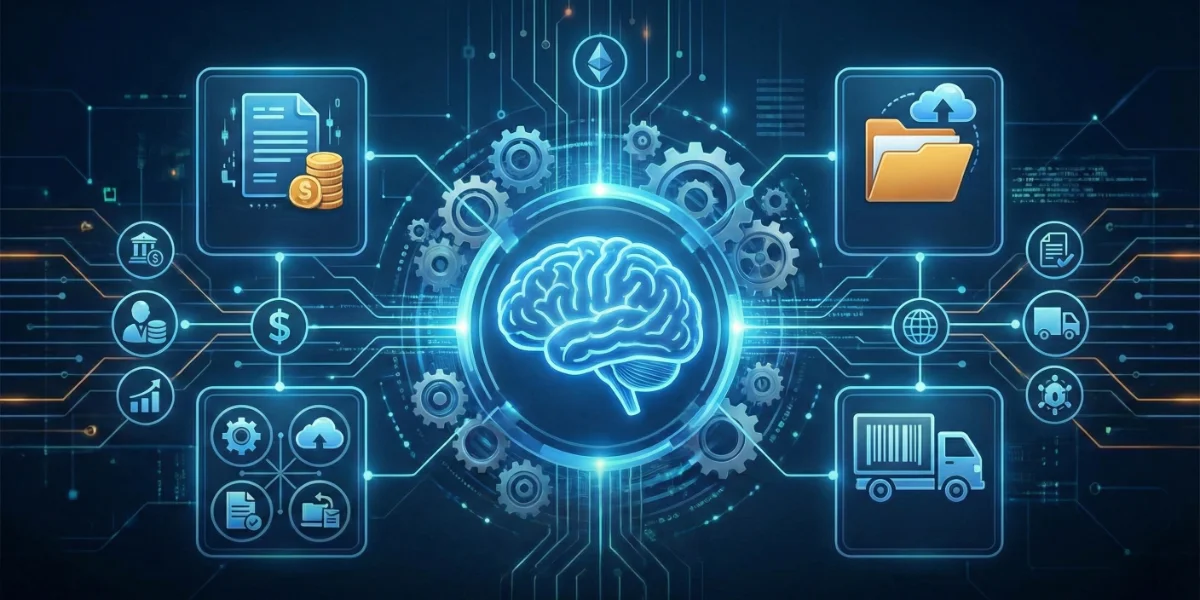
E-Invoice, E-Archive, and E-Waybill applications are not merely legal obligations for businesses; they are critical processes that directly impact operational efficiency. However, when these processes are managed independently of the ERP system, data inconsistencies, manual workloads, and a loss of control become inevitable. Therefore, it is of paramount importance to approach e-transformation with an ERP-centric and integrated perspective.
Canias ERP positions e-transformation processes not as a separate integration layer, but as a natural part of the ERP architecture. Managing E-Invoice, E-Archive, and E-Waybill processes in full integration with finance, logistics, and operations modules provides businesses with both operational control and a sustainable digital transformation advantage. In this article, we examine Canias ERP’s approach to e-transformation and the strategic gains it offers in detail.
What is E-Transformation?
E-Transformation is the entirety of the processes that allow businesses to create, transmit, and archive legal and commercial documents in a digital environment. Applications such as E-Invoice, E-Archive, and E-Waybill provide operational speed, cost advantages, and legal compliance by eliminating manual document production. Today, e-transformation has become a critical necessity not only for regulatory compliance but also for increasing process efficiency.
However, the true benefit of e-transformation emerges when these processes work integrated with ERP systems. Managing invoices, waybills, and accounting transactions in different systems leads to data inconsistency, additional workload, and loss of control. Therefore, ERP-centric e-transformation ensures that documents are not just digitized but managed in an integrated and sustainable manner within business processes.
Positioning E-Transformation in Canias ERP
Canias ERP treats e-transformation as a natural component of the system, rather than an independent integration added to the ERP later. Thanks to this approach, e-invoice, e-archive, and e-waybill processes work 100% integrated with finance, logistics, and operations modules. Consequently, data is produced, processed, and reported from a single center.
The ETR (E-Transformation) module family of Canias ERP is designed to manage e-transformation processes end-to-end. There is no need for manual data transfer between billing, shipment, and accounting steps. This structure minimizes operational errors while offering a document management system that is auditable, traceable, and compliant with legislation. In Canias ERP, e-transformation is an integrated business process management approach beyond mere digitization.
E-Invoice Integration in Canias ERP
Canias ERP views E-Invoice integration as a natural part of financial processes. This allows invoice creation, approval, sending, and accounting steps to be managed through a single platform in a fully integrated manner.
Positioning e-invoice processes within the ERP eliminates manual data entry and provides significant time savings for finance teams. Invoices work simultaneously with the finance module, preserving data consistency throughout the process. This reduces operational errors and guarantees regulatory compliance.
Canias ERP E-Invoice integration offers businesses the following advantages:
- 100% compatibility with accounting and finance modules.
- Real-time invoice tracking and control.
- Auditable and traceable financial processes.
E-Archive Invoice Processes in Canias ERP
E-Archive Invoice is not just an extension of digital document management; it is an inseparable part of customer and sales processes. Canias ERP manages e-archive invoices within a centralized structure across all workflows, from sales to accounting.
Thanks to this structure, e-archive invoices do not have to be moved between different systems. The process starting with the sales transaction progresses automatically within the ERP, and document management is provided through a single source of truth. This creates a significant control advantage in terms of reporting, auditing, and customer management.
E-Archive Invoice processes in Canias ERP:
- Work integrated with sales and customer data.
- Simplify document storage and access processes.
- Increase operational transparency and traceability.
E-Waybill Integration with Canias ERP
E-Waybill integration plays a critical role in the digitization of shipment and logistics processes. Canias ERP supports operational continuity by directly integrating e-waybill processes with logistics and inventory management.
All steps before and after shipment are controlled within the ERP. This ensures no disconnect between waybill information, stock movements, and shipment data. The reduction in manual processing allows field operations to proceed faster and without errors.
E-Waybill integration with Canias ERP:
- Provides full control over logistics processes.
- Maintains the consistency of shipment and inventory data.
- Grants operational speed and accuracy.
Advantages of Integrated E-Transformation within ERP
Integrated e-transformation within ERP allows businesses not only to produce digital documents but to manage them as a natural part of business processes. Positioning E-Invoice, E-Archive, and E-Waybill processes outside the ERP leads to data duplication, loss of control, and operational sluggishness.
Through an ERP-centric structure, all e-transformation processes proceed via a single source of truth. This approach guarantees consistency in both financial and operational processes. Businesses handle document management as a holistic process rather than a separate operation.
Key advantages of integrated e-transformation within ERP:
- Operational efficiency and time savings.
- Reduction of manual errors and data inconsistencies.
- Full transparency in audit and reporting processes.
- Sustainable management of regulatory compliance.
Why Canias ERP for E-Transformation?
Canias ERP positions e-transformation as an inseparable part of the ERP architecture rather than a temporary integration solution. This approach ensures that businesses meet today’s legal requirements while remaining ready for future needs.
In Canias ERP, e-transformation processes work 100% integrated with finance, logistics, and operations modules. Documents are not moved between different systems, and data is not re-entered manually. All processes are monitored and managed through a single platform. This grants businesses both operational control and strategic flexibility.
Core elements that make Canias ERP powerful for e-transformation:
- An e-transformation approach embedded in the ERP.
- Modular and scalable structure.
- Customizable process design.
- A long-term digital transformation vision.
With Canias ERP, e-transformation becomes a strategic investment that advances the digital maturity of the enterprise, rather than just a solution for today’s needs.
Frequently Asked Questions (FAQ)
Does Canias ERP support e-Invoice, e-Archive, and e-Waybill processes?
Yes. Canias ERP manages e-Invoice, e-Archive, and e-Waybill processes in an integrated manner within the ERP system.
Is e-Transformation a separate integration in Canias ERP?
No. e-Transformation is positioned as a native part of the Canias ERP architecture.
Do e-Invoice processes work in integration with accounting?
Yes. e-Invoice processes operate in full compatibility with the finance and accounting modules.
Can e-Archive invoices be managed centrally within the ERP?
Yes. e-Archive invoices are managed through a single source of truth, from sales to accounting.
Does the e-Waybill integration cover logistics processes?
Yes. e-Waybill processes are fully integrated with the inventory and logistics modules.
Does it reduce the need for manual data entry?
Yes. Thanks to the integrated structure, the need for manual processing is minimized.
Is Canias ERP suitable for different industries?
Yes. Thanks to its modular structure, it can be utilized across all sectors regardless of the industry.
Are e-Transformation processes auditable?
Yes. All documents are structured to be traceable and reportable.